
Computer logic
The logic of the computer is based on boolean algebra and number system on base two (binary system). The information is represented in binary form by using the digits 0 (zero) and 1 (one). In a digital circuit, in a given instant the presence of an electrical pulse (bits or digits) represents the first digit of the binary system. Conversely, the absence of an electrical impulse represents the number 0.
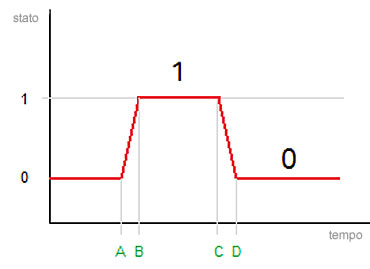
The electrical impulses are called bits. Once translated information in bits, these are processed by logic circuits (logic gates), able to associate a given output pulse to the electrical pulses in the entry. The logic gates are electrical circuits composed of switches (switches) in series or parallel. Each logic gate performs a particular function simple Boolean algebra (NOT, AND, OR, NAND, XOR, etc.).. For example, the following electrical circuit allows to perform the function of the OR operator:
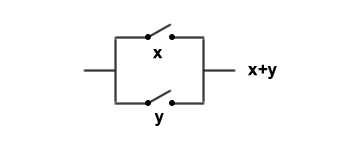
The combination of logic gates can create combinatorial logic circuits to perform functions and also more complex calculations. From a truth table, the logic gates are combined together in an electric circuit (circuit switching operation) to achieve the same result with the electrical impulses.

Logic circuits may be also accompanied by memory elements to record the electrical impulses passed during the calculation process. In the presence of elements of the memory logic circuit is said sequential circuit (switching circuit sequentially). The combination of electrical circuits determines the integrated circuits of the electronics / computer science which is based on the logic of the computer.


